
Root Canal Therapy
Root canal treatment is used to remove inflamed or infected tissue from inside the tooth, clean and seal the canals, and help preserve the natural tooth whenever possible.

Persistent tooth pain, sensitivity, swelling or discomfort when chewing may be signs of inflammation or infection inside a tooth. Fontana Dental Group provides evaluation and root canal treatment designed to address the source of the problem and preserve the natural tooth whenever possible.
Endodontics focuses on diagnosing and treating problems involving the inside of the tooth, including the dental pulp and root canal system. The pulp can become inflamed or infected because of deep decay, a crack, repeated dental treatment, trauma or another condition that allows bacteria to reach the inner tooth.
Root canal therapy removes inflamed or infected tissue, cleans and seals the inside of the tooth, and is intended to preserve the natural tooth whenever it can be predictably restored. Our team explains the findings, treatment options and recommended next steps so you can make an informed decision about your care.
See What to Expect During Root Canal Treatment →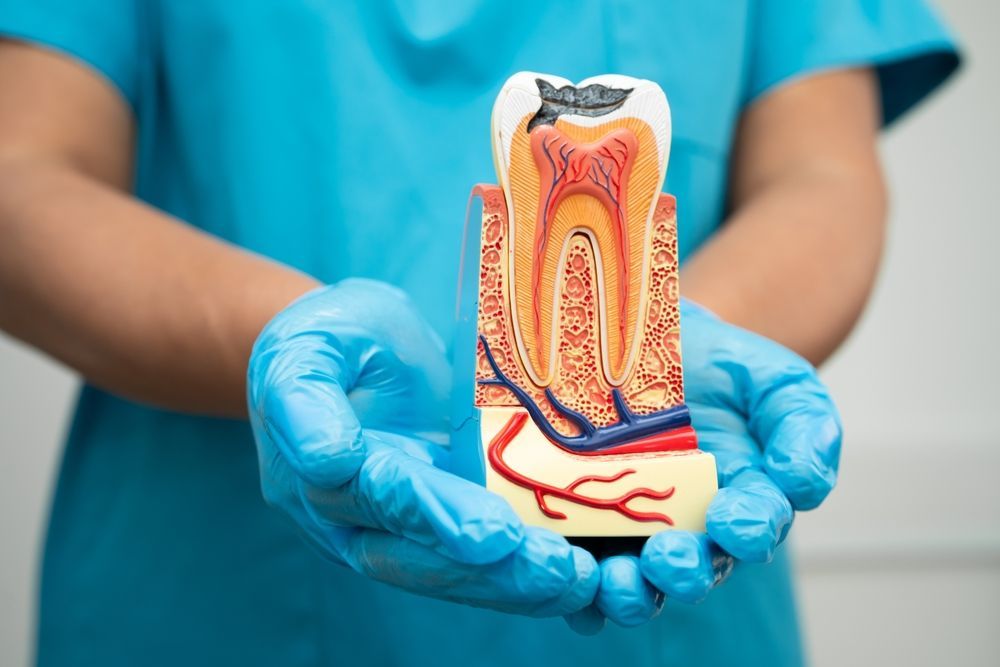
Not every toothache requires a root canal, but persistent or worsening symptoms should be evaluated. Dental examination and X-rays help determine what is causing the problem and which treatment may be appropriate.
Pain that does not improve or repeatedly returns should be evaluated.
Prolonged sensitivity may indicate inflammation inside the tooth.
Pressure or biting discomfort can occur with infection, cracks or inflammation.
Swelling, tenderness, drainage or a recurring bump on the gum needs attention.
A tooth that becomes noticeably darker after trauma or damage may require evaluation.
Cracks can allow bacteria to reach the inside of a tooth and cause symptoms.

We examine the tooth and use dental X-rays when needed to evaluate decay, infection, inflammation, fractures and the surrounding bone.
Local anesthetic is used to help keep the treatment area comfortable. Inflamed or infected tissue is removed and the root canal system is carefully cleaned and sealed.
After root canal treatment, the tooth may need a filling or dental crown to restore strength, function and protection for everyday use.
Treatment recommendations depend on the condition of the tooth, previous dental treatment, symptoms, X-ray findings and whether the tooth can be predictably restored.
Root canal treatment is used to remove inflamed or infected tissue from inside the tooth, clean and seal the canals, and help preserve the natural tooth whenever possible.
A previously treated tooth can occasionally develop new symptoms or infection. Evaluation helps determine whether retreatment or another procedure may be appropriate.
When symptoms persist around the root tip after previous treatment, endodontic surgery may be considered depending on the condition of the tooth and surrounding tissues.
Cracked teeth can cause intermittent pain, sensitivity or infection. Careful evaluation helps determine the location and extent of the crack and whether the tooth can be preserved.
Severe tooth pain, swelling, trauma or signs of dental infection should be evaluated promptly. Call our Fontana office to discuss your symptoms and current appointment availability.
Explore Emergency Dentistry →When a tooth is restorable, root canal treatment may allow it to remain in place rather than being removed. Keeping a natural tooth can help maintain normal chewing, support your existing bite and reduce the need for tooth-replacement treatment.
The long-term outlook depends on the amount of healthy tooth structure remaining, periodontal support, the quality of the final restoration and other individual factors. We explain what we find and what treatment may provide the most predictable result.
Preserving the tooth can help maintain chewing and bite stability.
Treatment targets damaged tissue inside the tooth and root canal system.
A final filling or crown may be recommended to protect the treated tooth.
Learn more about tooth infections, root canal therapy, treatment comfort, dental crowns, recovery and preserving your natural teeth at Fontana Dental Group.
Possible signs include persistent tooth pain, prolonged sensitivity to hot or cold, discomfort when chewing, swelling, gum tenderness, tooth discoloration or a recurring bump on the gums. Some infected teeth may produce few noticeable symptoms, which is why a dental examination and X-rays are important.
Root canal treatment may be needed when the pulp inside a tooth becomes inflamed, damaged or infected. This can result from deep decay, a crack, repeated dental treatment, trauma or another problem that allows bacteria to reach the inside of the tooth.
Root canal treatment is performed using local anesthetic to help keep the treatment area comfortable. Many patients seek treatment because they are already experiencing pain from inflammation or infection inside the tooth. Some tenderness afterward can be normal and usually improves as the area heals.
Treatment time depends on the location of the tooth, the number and shape of its canals and the severity of the infection. Some root canal procedures can be completed during one appointment, while more complex cases may require additional visits.
Root canal treatment is intended to remove inflamed or infected tissue from inside the tooth, clean and seal the canals and preserve the natural tooth whenever it can be predictably restored.
Many teeth, particularly molars and premolars, need a dental crown after root canal treatment. A crown can help protect a tooth that has been weakened by decay, fractures, previous fillings or loss of natural tooth structure. Your dentist will explain the appropriate final restoration.
The treated tooth and surrounding area may feel tender for a short period. Follow the instructions provided by your dental team, avoid chewing hard foods on the tooth until it is fully restored and return for any recommended filling or crown.
An untreated dental infection may lead to worsening pain, swelling, an abscess, bone loss or eventual loss of the tooth. Infection may also spread into surrounding tissues. Persistent pain, swelling, drainage or fever should be evaluated promptly.
A previously treated tooth can occasionally develop new symptoms or infection. This may happen because of untreated canal anatomy, new decay, a cracked restoration, leakage or another problem. The tooth must be evaluated to determine whether retreatment, another procedure or extraction is appropriate.
Contact Fontana Dental Group when tooth pain is persistent, severe, worsening or accompanied by swelling, drainage, fever, prolonged sensitivity or pain when chewing. Prompt evaluation may provide more treatment options and help prevent the condition from becoming more serious.
Contact Fontana Dental Group to schedule an evaluation and learn whether root canal treatment may help preserve your natural tooth.